Wondering whether to refinish, repair, or replace your Nashville hardwood floors? Learn how to choose the right path for beauty, longevity, and less disruption.
Quick answer: A well-loved hardwood floor can often be restored rather than replaced. For Nashville homeowners, the right choice usually comes down to the floor's remaining thickness, the depth and location of damage, the stability of the boards, and the look you want for the rest of the home. Refinishing is often the right answer for surface wear, repairs can solve localized damage, and replacement is best when the floor cannot be safely restored or when an addition requires new flooring that must blend with the old.
Nashville homes come in every style, from long-established residences with original character to newer renovations that need a more cohesive finish. In either case, hardwood should be evaluated before a decision is made. The best result starts with preserving what is worth keeping, repairing what can be repaired, and replacing only what truly needs to be replaced.
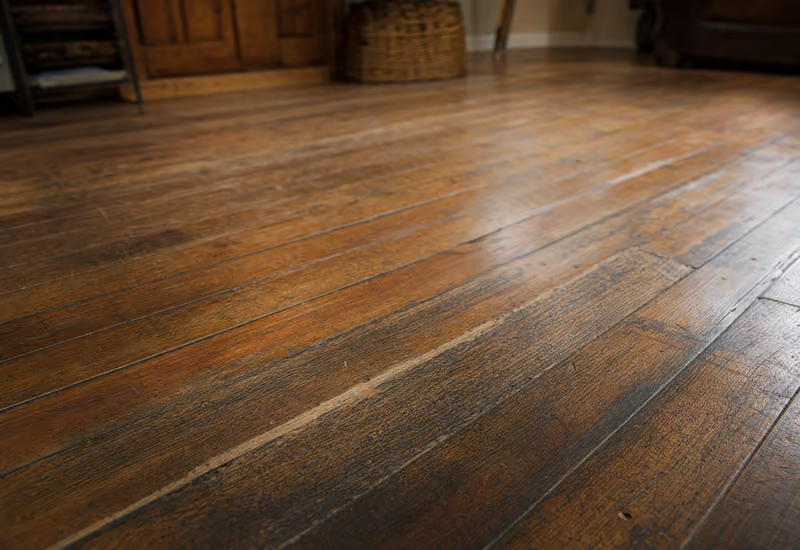
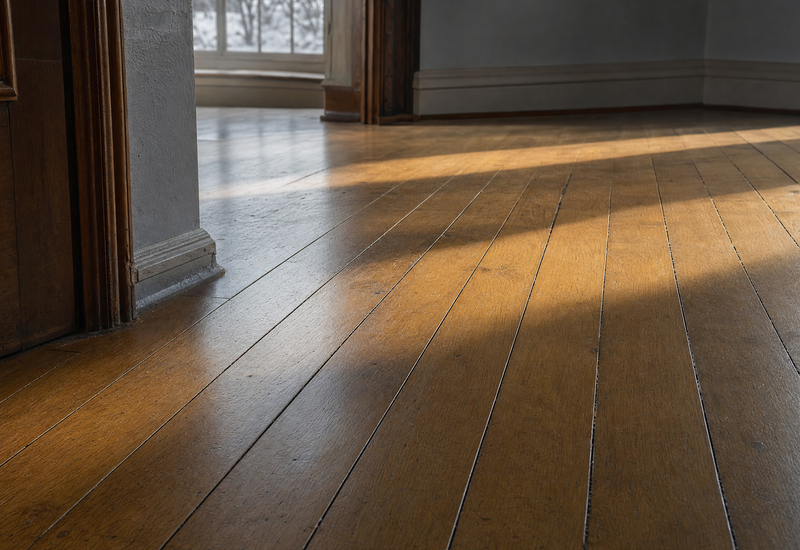
Hardwood floors age in visible ways. The finish may lose its sheen in hallways, the color may fade near bright windows, or pet scratches may become more noticeable in high-traffic rooms. Those signs can be frustrating, but they do not automatically mean the floor is beyond saving. A professional inspection looks beyond the surface to determine whether the boards are sound and whether there is enough material for a successful restoration.
A floor with widespread wear but stable boards is often a strong refinishing candidate. Sanding removes the worn finish and minor surface marks, then a new stain and protective finish create a fresh look that still respects the home's original materials. If you are unsure whether the time is right, start with our guide to seven signs your hardwood floors may need refinishing.
Refinishing is one of the most meaningful ways to update an existing hardwood floor without removing the character that made you love it in the first place. It is especially valuable when the board layout and wood species already suit the home, but the finish no longer suits your life or style.
A change in stain color or sheen can make a major difference. A lighter natural look can brighten a room, while a satin finish can provide a refined appearance without calling attention to every footprint. In our article about hardwood floor trends for Nashville home renovations, we explore why many homeowners are choosing natural tones, wide-plank looks, and lower-sheen finishes. This restoration conversation goes one step further by asking whether your current floor can become that look through refinishing.
Homeowners often worry about the disruption of sanding. That concern is understandable, particularly when a renovation includes several moving parts. Our dustless floor refinishing process is designed to keep the experience cleaner and more manageable. Careful containment and cleanup help protect the rest of the home while the floor is renewed.
Not every floor problem affects every board. A leak from a plant, a pet accident, a dropped object, or normal movement over time may leave one area looking far worse than the rest. Replacing the entire floor for a localized issue is not always necessary.
The value of professional repair is in the details. Replacement boards need to fit correctly, sit at the proper height, and blend as naturally as possible with the surrounding floor. Matching is not a guessing game. Grain, board width, wood species, color, and finish all matter. Our team assesses those details so the repair supports the whole room instead of becoming the first thing you notice when you walk in. Learn more about our approach to hardwood repair if you are dealing with damaged boards or a section that no longer matches.
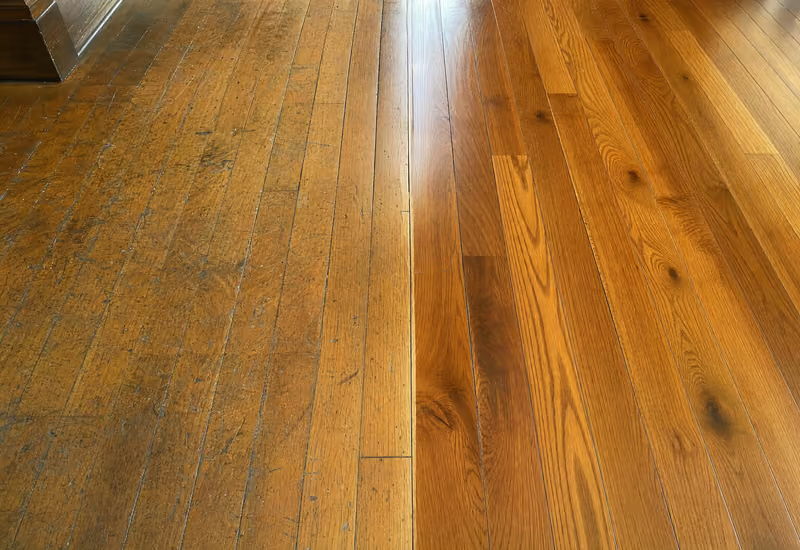
Repairs can also be paired with refinishing. This approach is especially useful when an old patch, a removed wall, or a former built-in has left an obvious break in the flooring. By correcting the problem area first and refinishing the connected space afterward, the room can feel complete again.
Replacement is sometimes the most responsible recommendation. If a floor has serious water damage, widespread movement, deep structural issues, or has been sanded too many times, another restoration may not provide the durability you deserve. The same may be true if you are making a substantial floor-plan change and want to create a consistent hardwood surface through multiple rooms.
Choosing replacement does not mean giving up on a timeless result. It gives you the opportunity to select a floor that fits how you live now. Solid hardwood can offer a classic, generational feel in the right setting. Engineered hardwood can offer valuable stability for certain applications, including areas where the subfloor or installation conditions call for it.
The better question is often, "What will give this home the most lasting result?" The answer may be a full refinishing project, a precise repair, a carefully planned replacement, or a combination of all three. The right path respects the condition of the floor, the character of the home, and the way your household uses each room.
Careful workmanship helps preserve the features that make a space feel like yours. A conversation and a close look at the floor make it possible to choose the option that serves your home best.
Can hardwood floors be refinished instead of replaced?
Often, yes. If the boards are stable and have enough usable wood remaining, refinishing can remove surface wear and allow you to choose a new stain color and finish. A professional evaluation is the safest way to know whether refinishing is appropriate.
Can damaged hardwood boards be replaced without redoing the whole floor?
In many cases, yes. A targeted repair can replace damaged boards and restore the area. The best results come from careful attention to board size, species, grain, and finish so the repair blends with the floor around it.
Is dustless hardwood floor refinishing really less messy?
Dustless refinishing is designed to capture sanding dust at the source and reduce the mess associated with a traditional sanding process. Protective preparation and daily cleanup remain important parts of a well-managed project.
How long does hardwood floor restoration take?
The schedule depends on the project's size, condition, repairs, stain selection, and finish cure time. A professional assessment can provide a project-specific timeline.
Before you assume your hardwood needs to come out, let us take a closer look. Copeland Hardwood Floors provides hardwood repair, refinishing, restoration, and installation for Nashville homeowners. We will help you understand the condition of your floor and recommend the path that makes the most sense for your home. Request a free quote and start with a conversation about floors built to look beautiful and last.