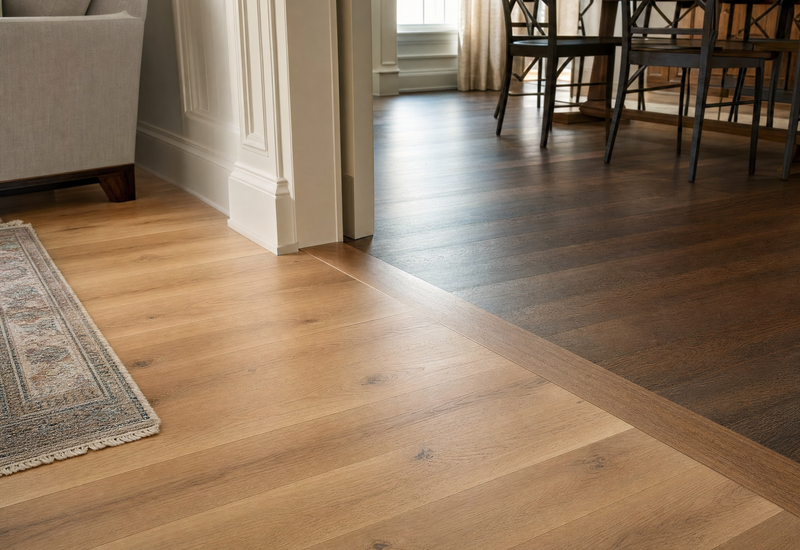
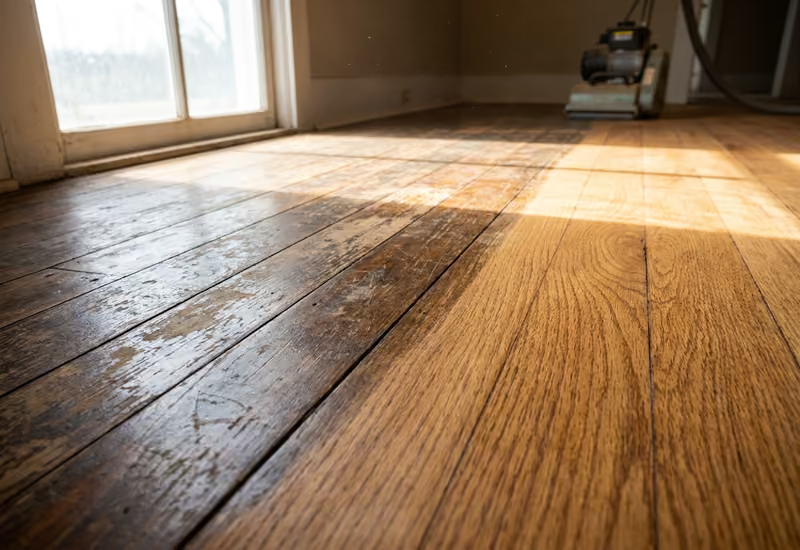
Gallatin has brand-new builds and century-old homes, and they need opposite things from a hardwood floor. Plus the humidity number that causes winter gaps.
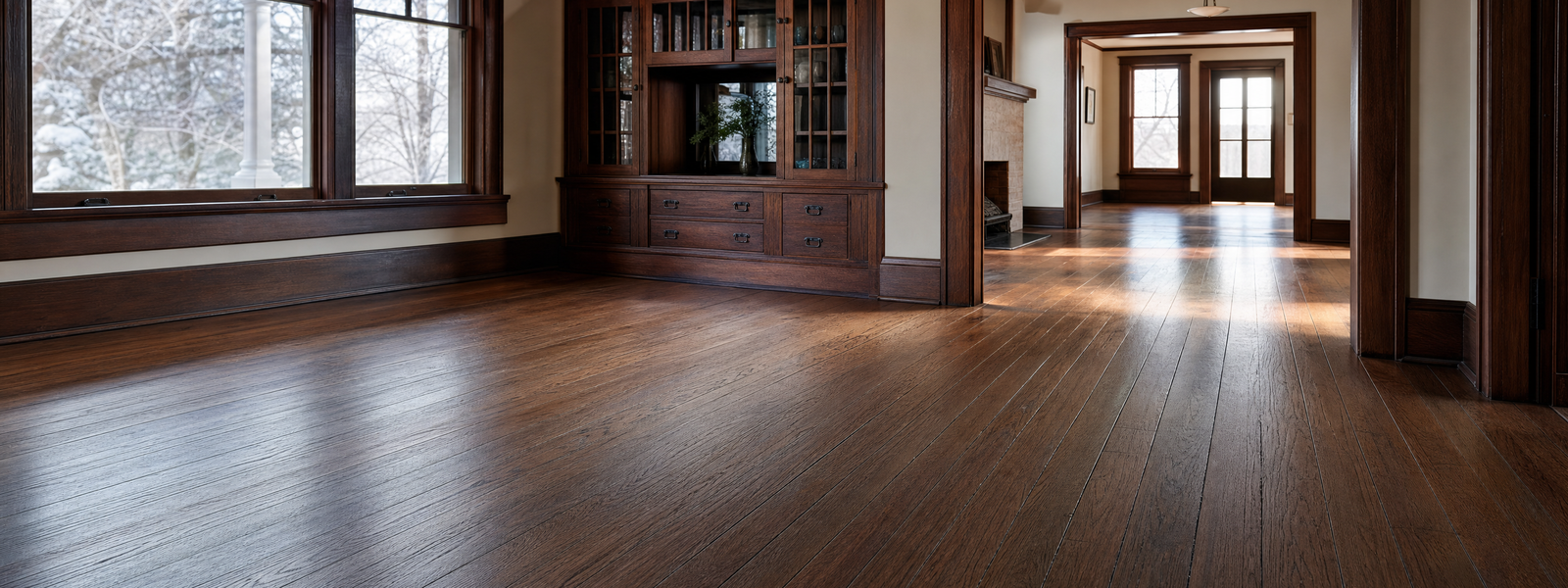
Quick answer: Gallatin has two very different housing stocks, and they need opposite things from a wood floor. The city grew from about 30,000 people in 2010 to roughly 52,000 by 2024, so a large share of local homes are recent builds, many on concrete slabs, with subfloors that have not finished drying. The historic core has homes with original floors worth saving. What both share is Middle Tennessee's humidity swing, which is the single biggest cause of floor complaints here. Keep indoor relative humidity between 30% and 50% year round and most of those complaints never happen.
We have worked on both kinds of house from our shop on Airport Road for years. See our full Middle Tennessee service area to confirm nearby coverage. The problems are genuinely different, and advice written for a national audience tends to miss both.
If you have ever looked down in February and seen thin dark lines between boards that were not there in August, this is why.
Wood absorbs and releases moisture from the air and changes size as it does. The National Wood Flooring Association recommends keeping interiors between 30% and 50% relative humidity and between 60 and 80 degrees.
The reason that band matters is easier to appreciate with a real number. Take a 5-inch red oak plank and move it through a 30-point humidity change, from 30% up to 60%. That single board changes about 0.09 inches. Across ten boards, the movement adds up to roughly 0.88 inches, more than three quarters of an inch. Across a 10-foot room, it is more than two inches.
Two inches of movement in a room is enough to open severe gaps or, in the other direction, to push boards hard against each other and cup them.
Middle Tennessee makes this worse than most places. Outdoor humidity here averages around 70% across the year and runs highest in late summer. Then heating season arrives, the furnace runs, and indoor air dries out dramatically. Your floor experiences that swing twice a year, every year.
What to do about it:
Gaps that do not close, boards that cup and stay cupped, or a floor that has separated from the baseboard are different, and worth an evaluation.
Gallatin's growth has been fast. Roughly 30,278 residents at the 2010 census, 44,431 by 2020, and an estimated 52,489 by 2024. Much of that arrived as new subdivisions.
New construction brings specific flooring considerations:
Slab-on-grade changes the product. Solid hardwood does not belong nailed or glued directly to concrete. If your house sits on a slab, engineered hardwood is how you get a genuine wood floor, and the slab needs moisture testing before anything is installed. Concrete releases moisture for a long time after it is poured, and a slab that reads fine on the surface can still be wet.
New houses are wet houses. Framing lumber, drywall mud, paint, and concrete all release moisture into a new build for months. Installing wood flooring into that environment and then watching it shrink as the house dries out is a common and avoidable failure. The house needs to be at normal living conditions, with HVAC running, before the floor goes in.
Acclimation is not a formality. Wood flooring needs time in the actual room, at the temperature and humidity the room will normally hold, before installation. Skipping it is how builder-grade floors end up gapping in year one.
Builder-grade is a wide range. If your builder installed engineered hardwood, the wear layer thickness determines whether you can ever refinish it. Many builder-grade engineered floors carry thin wear layers that can only be recoated, never sanded. It is worth finding out what you have before you plan around refinishing it later.
Gallatin has a central historic district and a good deal of housing that predates the growth wave. Older homes bring the opposite set of questions.
The floor under the carpet is often worth uncovering. Plenty of mid-century and older Gallatin homes have original oak underneath carpet installed decades ago. It is frequently in better shape than owners expect. Pull up a corner in a closet and look before you assume you need new flooring.
How much sanding life is left? Every refinishing removes material. A solid floor that has been sanded several times over its life may not have enough thickness above the tongue for another pass. Checking this is straightforward for someone who does it regularly, and it determines whether the answer is refinishing or replacement.
Crawlspaces drive moisture problems. An older home over a vented or damp crawlspace pushes moisture up into the subfloor and the flooring above it. If a floor cups persistently in one part of the house, the cause is often under it rather than in the room. Crawlspace moisture control fixes more floors than sanding does.
Original floors are usually worth the trouble. Old-growth wood is denser and often more beautiful than what is milled today, and boards from the 1920s or earlier are frequently narrower and quartersawn. A refinished original floor is a feature. A replacement is just a new floor. When an older floor needs repairs and careful renewal, hardwood floor restoration may preserve more of what makes the home distinctive.
Whatever the age of the house, the same three things determine whether a floor performs:
The subfloor. It has to be flat, dry, and sound. Moisture testing and leveling come before product selection, not after. Most floor failures trace back here.
The product suits the structure. Slab or below grade points toward engineered. Wood subfloor above grade opens up solid. Radiant heat narrows the options. This is a structural question, not a taste question.
Indoor humidity stays in range. The 30% to 50% band does more for a floor's appearance over twenty years than almost any other decision. For a broader look at long-term wood-floor care, read how long hardwood floors last.
Why do gaps appear between my hardwood floor boards in winter?Heating season dries indoor air, the wood releases moisture, and the boards shrink. A 5-inch red oak plank moves about 0.09 inches across a 30-point humidity swing, which adds up to more than two inches across a 10-foot room. Gaps that open in winter and close in summer are normal. Gaps that never close are worth evaluating.
What humidity should I keep my house at to protect hardwood floors?The National Wood Flooring Association recommends 30% to 50% relative humidity and a temperature between 60 and 80 degrees. In a Gallatin winter, a heated house often falls below 30%, so a humidifier is worth considering. In summer, air conditioning or a dehumidifier keeps you under 50%.
Can I install hardwood on a concrete slab in a new Gallatin home?Engineered hardwood, yes. Solid hardwood should not be nailed or glued directly to concrete. Either way, the slab needs moisture testing first, because concrete continues releasing moisture long after it is poured and a slab can be wet below a dry-looking surface.
Is the hardwood under my carpet worth refinishing?Very often it is. Many older Gallatin homes have original oak beneath carpet that is in better condition than owners expect. Pull up a corner in a closet to look. The question that decides it is how much thickness remains above the tongue for sanding.
How soon after a house is built can hardwood be installed?The house should be at normal living conditions with HVAC running, and the concrete, drywall, and paint should have released their construction moisture. Installing into a still-drying house is a common cause of first-year gapping. The flooring also needs to acclimate in the actual room beforehand. A well-planned custom hardwood installation accounts for those site conditions before the first board is laid.
Do you serve areas outside Gallatin?Yes. We are based in Gallatin and work throughout Middle Tennessee, including Hendersonville, Nashville, Franklin, Brentwood, Mt. Juliet, Lebanon, White House, Goodlettsville, Madison, Millersville, and Bethpage.
Whether you are in a three-year-old build off Long Hollow Pike or a house that has been standing since before the growth started, call Copeland Hardwood Floors at (615) 451-0723 or come by 610 Airport Rd, Gallatin, TN 37066. We will look at the subfloor, the structure, and what you actually want, and tell you which floor belongs in your house.
We serve Gallatin, Hendersonville, Nashville, Franklin, Brentwood, Mt. Juliet, Lebanon, White House, Goodlettsville, Madison, Millersville, and Bethpage.
Beauty that lasts a lifetime. Request a free quote today.