Learn the seven signs your hardwood floors may need recoating, refinishing, repair, or replacement. Serving Gallatin, Nashville, and Middle Tennessee.
The quick answer: Hardwood floors may need refinishing when you see deep scratches, worn-through finish, exposed or gray wood, persistent stains, heavy fading, or visible damage in high-traffic areas. If the finish is still intact and the floor is only lightly scratched or dull, a recoat may be enough. The best next step depends on whether the problem is limited to the surface or reaches the wood itself.
Hardwood floors do not usually fail all at once. Most show gradual signs of wear: a little dullness near the entry door, fine scratches in a hallway, a faded patch by a sunny window, or a spot where the finish no longer looks as smooth as it once did.
For homeowners in Gallatin, Nashville, Hendersonville, and surrounding Middle Tennessee communities, knowing what those signs mean can help you act before ordinary wear turns into deeper damage. The goal is not to refinish wood flooring at the first small scratch. It is to recognize when the protective finish is no longer doing its job and choose the right level of care.
A dull finish is often the first sign that a floor needs attention. In many homes, it appears first in busy areas such as entryways, hallways, kitchens, and living rooms. Light scratches may be visible when sunlight hits the floor at an angle, even if the wood itself is not damaged.
This does not always mean the floor needs a full sand-and-refinish. If the finish remains intact and the wear is mostly superficial, a screen-and-recoat may be an option. Recoating lightly prepares the existing finish and adds a fresh protective topcoat, helping restore sheen and protection without sanding the floor down to bare wood.
The finish on a hardwood floor provides a layer of protection against everyday moisture. A simple water-drop test can give you a preliminary indication of whether that protection is wearing thin.
Place a few drops of water on an inconspicuous part of the floor. If the drops bead or absorb slowly, the finish may still be providing protection. If the water soaks in immediately, the finish may be worn and the floor should be evaluated. This test does not diagnose every flooring problem, but it can be a helpful early warning sign. If water is penetrating the surface in high-traffic areas, it is better to address the floor before spills and daily moisture have an opportunity to discolor or damage the wood.
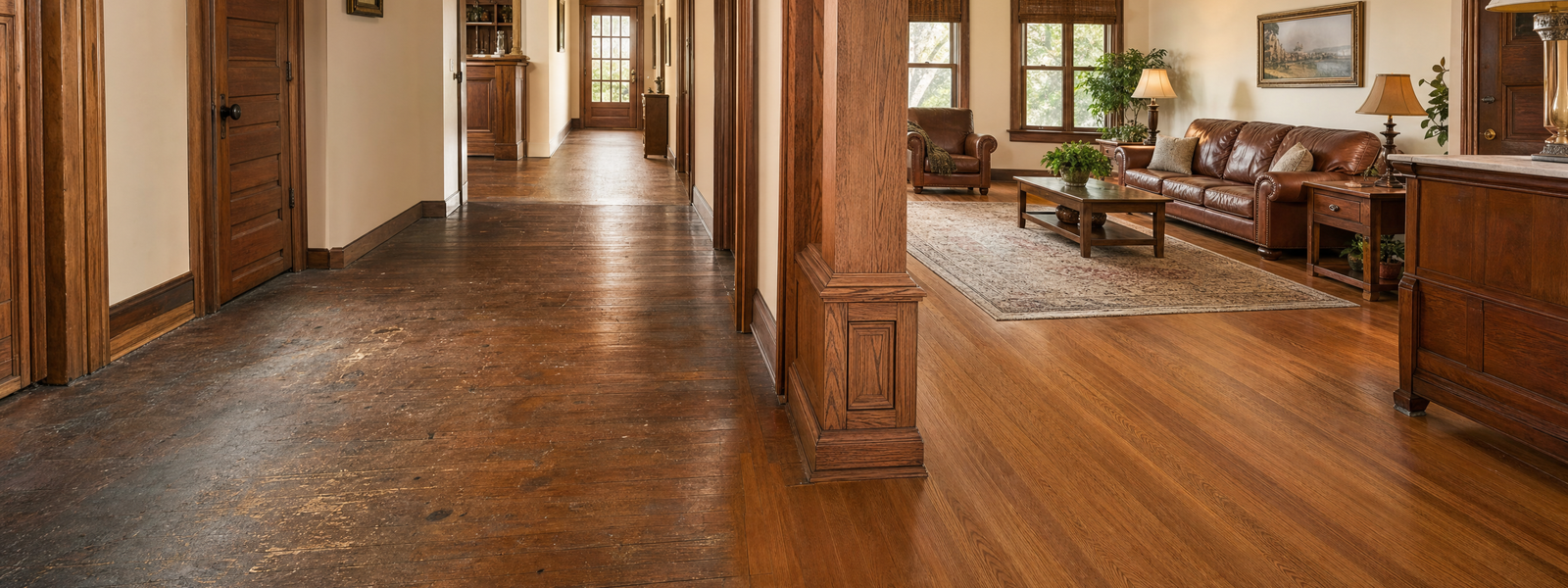
When the finish wears completely through, the wood beneath it becomes more exposed to dirt, moisture, and stains. Bare areas can look lighter, gray, rough, or different in texture from surrounding boards. They often appear in doorways, along heavily traveled paths, near kitchen work zones, or in front of seating areas.
This is generally more than a simple maintenance issue. A recoat may not be enough once the wood is exposed. Full refinishing may be needed to remove the damaged surface, even out the appearance, and apply a new protective finish. Do not wait too long when bare wood is visible. The longer it remains exposed, the more likely it is to absorb moisture and pick up stains that become harder to remove later.
Fine surface scratches are normal in an active home. Deep scratches and dents are different. If a scratch catches your fingernail, reveals lighter raw wood, or has darkened over time, it may have penetrated the protective coating.
A few isolated marks can sometimes be addressed with a touch-up or localized hardwood floor repair, depending on the floor and finish. But widespread deep scratches are often a sign that the floor needs more comprehensive restoration. Pets, furniture, dropped objects, and tracked-in grit can all contribute to deeper damage. Regular sweeping, dust mopping, or vacuuming with the bare-floor setting can help reduce future abrasion. Felt pads under furniture and mats at exterior doors also help reduce scratching.
Some discoloration is limited to the surface and may improve with appropriate cleaning. Other stains have penetrated into the wood. Dark rings, black areas near water exposure, pet stains, and deeply discolored boards deserve professional attention because their cause may be more significant than everyday dirt.
A full refinish can improve many cosmetic stains, but not every stain disappears completely with sanding. Damage caused by repeated moisture exposure, pet accidents, or water beneath the boards may require repairs in addition to refinishing. A good evaluation should be honest about what restoration can improve and whether a board replacement or moisture investigation is needed.
Not every hardwood-floor problem is a finishing problem. Cupping, significant gaps, loose boards, soft spots, or movement may indicate moisture, installation, or structural concerns.
Cupping occurs when the edges of a board rise higher than its center. It can result from an imbalance of moisture and should not be aggressively sanded before the underlying cause is addressed. Sanding too soon can create a permanently uneven floor once the boards return toward their normal shape. Likewise, loose boards or substantial gaps may need repair before any finish work begins. If you notice these signs, schedule a professional inspection rather than assuming refinishing alone will solve the issue.
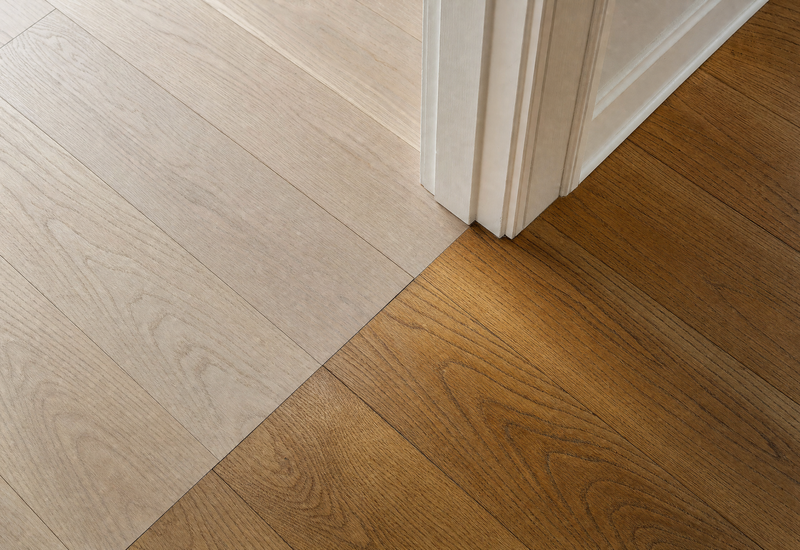
Over time, hardwood floors can develop an inconsistent appearance. One room may look rich and clean while another looks dull, yellowed, faded, or heavily scratched. This can happen because rooms receive different amounts of sunlight, traffic, cleaning, and furniture movement.
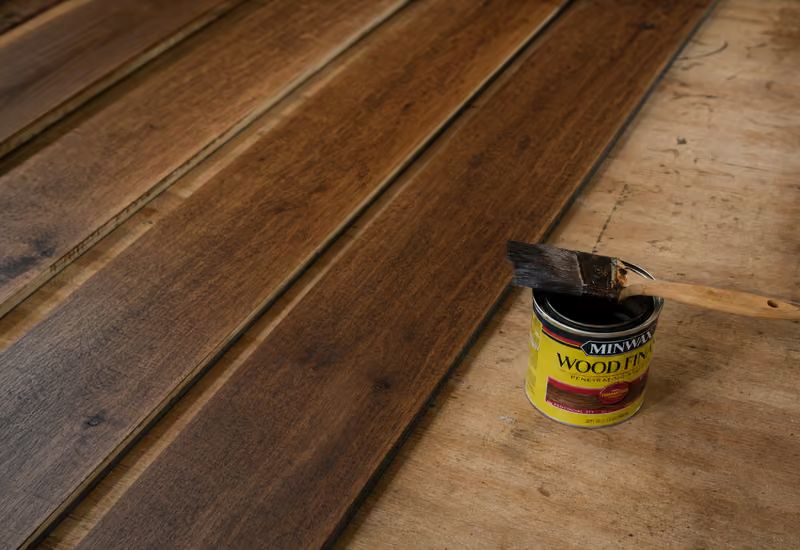
A professional refinishing project can create a more consistent appearance across connected areas, but the approach should be planned carefully. Older floors, mixed species, patched areas, and previous refinishing work may all influence how evenly a new stain or finish will appear. Before making a color change, it is wise to discuss testing. A sample area can help you understand how your specific wood will take stain and how the final color may look under the lighting in your home. Review available stain and finish options as part of the planning process.
The distinction matters. Recoating is a lighter restoration option that may work when the finish is still intact but looks dull or lightly scratched. It can add protection and freshen the appearance without removing wood.
Refinishing is a deeper process. It sands the floor to bare wood before new stain and/or finish is applied. It is more appropriate for deep scratches, worn-through finish, exposed wood, significant discoloration, or damage that cannot be addressed at the surface. A floor that has serious water damage, rot, structural movement, or too little usable material remaining may require repair or replacement rather than refinishing. An on-site assessment helps determine the least invasive option that will actually address the problem.
The best time to address hardwood-floor wear is before the protective finish is gone and everyday moisture can reach bare wood.
You do not need to prepare a perfect room before asking for guidance. It is helpful, however, to note where the damage appears, when you first noticed it, and whether there has been a spill, plumbing issue, pet accident, or other event that may explain the change.
Take clear photos in natural light and make note of the rooms involved. If you know whether the flooring is solid or engineered, share that information. If you do not know, that is fine—a professional can often help identify the floor during an inspection. Avoid covering the issue with waxy products, strong cleaners, or a new coat of finish before the floor is evaluated. Those products can complicate the restoration process and make it harder to determine the condition of the existing surface.
Can I recoat hardwood floors instead of refinishing them?
Possibly. Recoating may be appropriate when the existing finish is intact and the issue is limited to dullness or light surface scratching. Deep damage, bare wood, heavy staining, or incompatible existing products can make full refinishing or another repair necessary.
How do I know if a scratch is deep enough to need refinishing?
A scratch that catches your fingernail, exposes raw wood, or darkens from absorbed dirt or moisture may have penetrated the finish. A few isolated scratches may be repairable, while widespread deep scratching may justify a full assessment.
Can black water stains be sanded out of hardwood floors?
Some staining can improve with refinishing, but the result depends on how deeply the discoloration has penetrated and whether moisture damage is ongoing. A professional can assess whether sanding, board replacement, or moisture-related repair is the right path.
Do cupped hardwood floors need to be sanded?
Not immediately. Cupping is often related to moisture imbalance. The cause should be identified and corrected before sanding is considered, because sanding a cupped floor too early can leave it uneven later.
If you are seeing worn paths, scratches, stains, exposed wood, or uneven boards, Copeland Hardwood Floors can help you understand what your floor needs next. Whether the right answer is a light recoat, full refinishing, targeted repair, or replacement of damaged material, the goal is to protect the character and remaining life of your wood flooring. Contact us to schedule an evaluation.