Thinking about installing new hardwood floors? Learn what the process involves, what it costs, and how to choose the right wood for your home — from the experts at Copeland Hardwood Floors in Gallatin, TN.
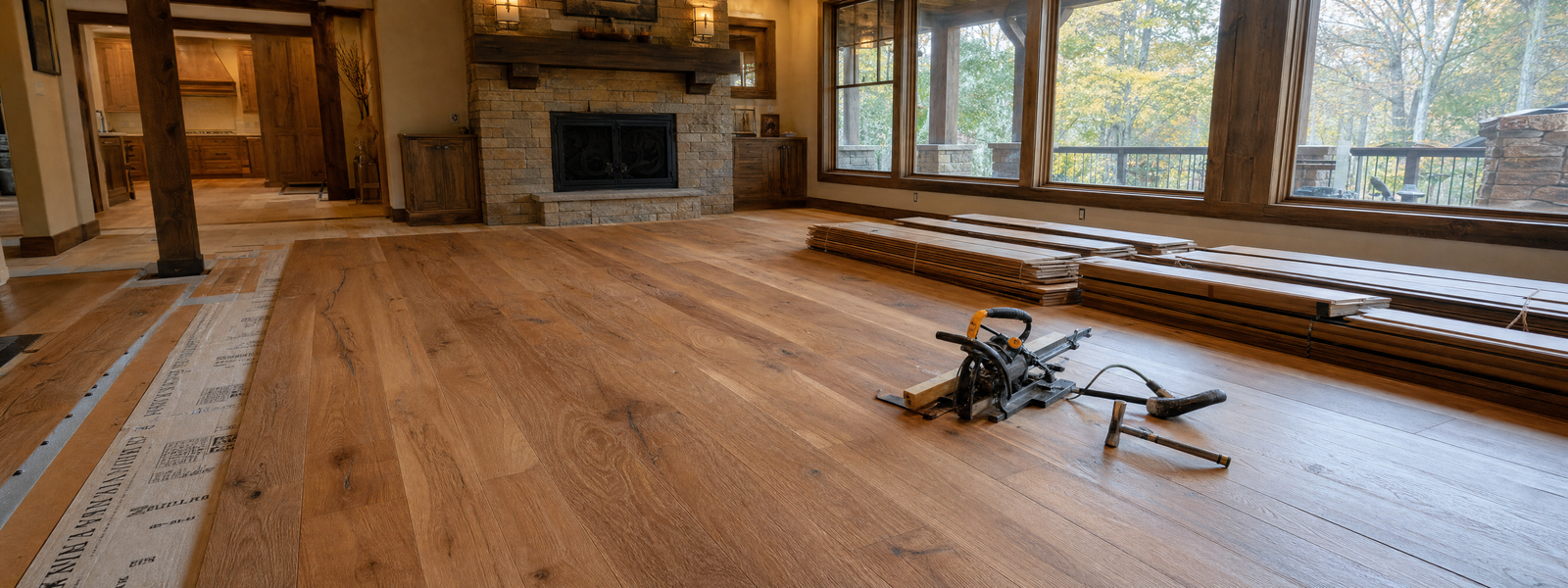
Installing new hardwood floors is one of the most significant and rewarding investments you can make in your home. Whether you are building a new house, replacing old carpet, or upgrading from builder-grade laminate, hardwood completely transforms the look, feel, and value of a space. However, for many homeowners in Gallatin and Middle Tennessee, the process of choosing and installing new floors can feel overwhelming.
From understanding the true cost to selecting the right materials for your lifestyle, making informed decisions upfront ensures you get floors that last a lifetime. Copeland Hardwood Floors is here to walk you through exactly what to expect during a professional hardwood floor installation.
One of the most common questions homeowners ask is, "How much does hardwood floor installation cost?" The answer depends on several factors, including the type of wood, the condition of your subfloor, and the complexity of the layout.
Generally, the cost is broken down into two main categories: materials and labor. Solid hardwood typically costs more upfront than engineered wood, and exotic species like mahogany or Brazilian cherry will carry a higher price tag than domestic oak or hickory. Labor costs are influenced by the preparation required. If your installer needs to tear out existing tile, level an uneven subfloor, or work around complex room shapes and staircases, the labor cost will reflect that additional time and expertise.
While it can be tempting to choose the lowest bid, a cheap installation often leads to expensive problems later, such as squeaking boards, uneven gaps, or finish failure. Investing in a professional hardwood installation ensures the job is done right the first time.
The first major decision in any installation project is choosing between solid and engineered hardwood. Both are real wood, but they are constructed differently and perform differently depending on the environment.
Solid hardwood is exactly what it sounds like: a single, solid piece of wood milled from a tree. It is incredibly durable and can be sanded and refinished multiple times over its lifespan. However, solid wood expands and contracts with changes in humidity, making it unsuitable for basements or installation directly over concrete slabs.
Engineered hardwood consists of a real wood veneer layered over a high-quality plywood or high-density fiberboard core. This construction makes it much more stable and resistant to moisture and temperature fluctuations. It is an excellent choice for homes built on concrete slabs, areas with high humidity, or when installing wide planks, which are more prone to warping in solid wood formats.
The secret to a flawless hardwood floor is what lies beneath it. A beautiful floor installed over a bad subfloor will quickly become a problem. Before any wood is laid down, a professional installer will thoroughly inspect the subfloor. It must be clean, flat, and structurally sound. Any dips or high spots must be leveled, and loose subfloor panels must be secured to prevent future squeaks. Additionally, the installer will test the moisture levels in both the subfloor and the new wood to ensure they are compatible. Skipping these preparation steps is the leading cause of hardwood flooring failures.
Once the preparation is complete, the actual installation begins. The wood must acclimate to the home's environment for several days before it is installed. This allows the wood to adjust to the temperature and humidity, preventing excessive expansion or contraction after it is nailed or glued down.
The installation method depends on the type of wood and the subfloor. Solid wood is typically nailed or stapled to a wooden subfloor. Engineered wood can be nailed, glued, or sometimes floated, meaning the planks click together without being attached to the subfloor. A skilled installer will ensure the layout is visually balanced, staggering the joints and blending the natural color variations of the wood for a seamless look.
Hardwood flooring is not a forgiving material for DIY projects. Mistakes in layout, improper fastening, or ignoring moisture guidelines can ruin thousands of dollars worth of materials. Copeland Hardwood Floors brings decades of experience to every hardwood installation project in Gallatin and the surrounding areas. We handle everything from the initial consultation and subfloor preparation to the final trim work, ensuring your new floors are as structurally sound as they are beautiful.
Ready to upgrade your home with new hardwood floors? Contact Copeland Hardwood Floors today to schedule a consultation and get a detailed quote for your project.
How much does hardwood floor installation cost in Tennessee?
The cost varies based on the type of wood, square footage, and subfloor condition. Materials and labor combined typically range from $8 to $20 per square foot for most residential projects. A professional inspection is the best way to get an accurate estimate for your home.
How long does it take to install new hardwood floors?
Most residential installations take two to five days depending on the size of the project, the installation method, and the complexity of the layout. Acclimation time for the wood before installation adds a few additional days.
Do I need to remove old flooring before installing hardwood?
In most cases, yes. Installing hardwood over old carpet or damaged flooring is not recommended. A clean, level subfloor is essential for a long-lasting installation.