Learn the warning signs that your hardwood floors need refinishing — from dull finish and spreading scratches to faded color and gray worn areas — and find out when to call a professional.
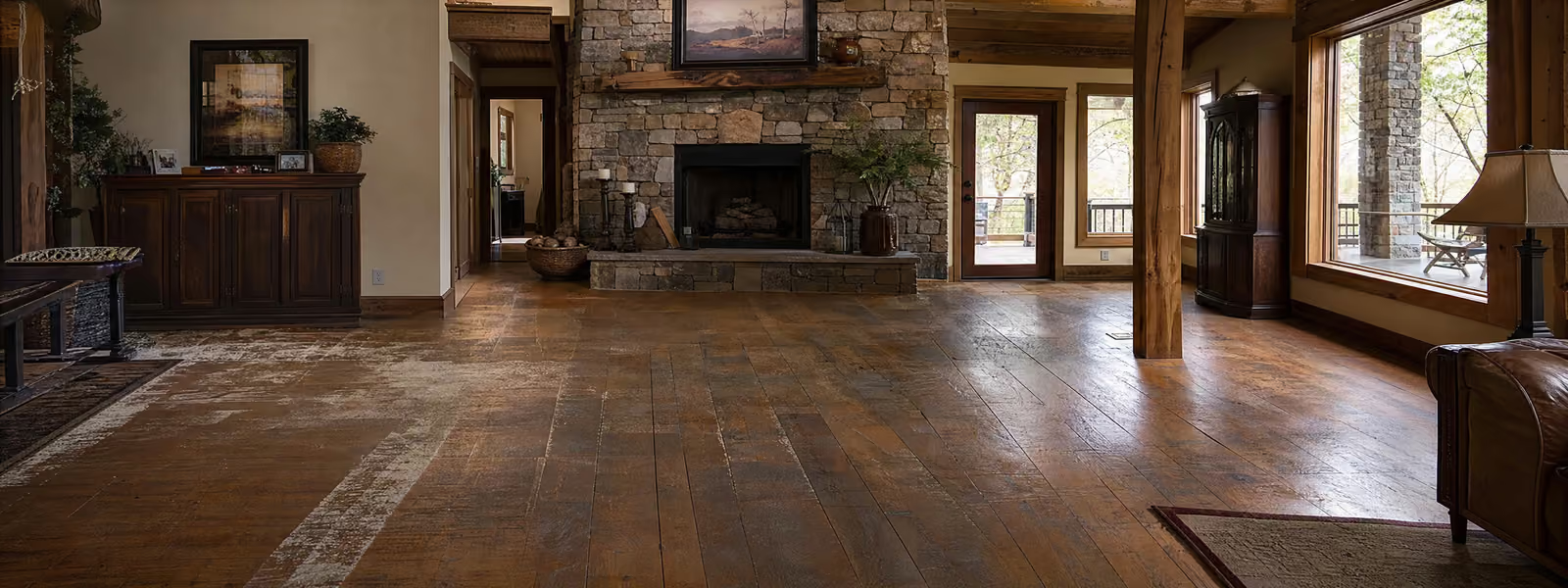
Hardwood floors do not usually fail all at once. They age slowly. A few scratches appear near the front door. A hallway starts to look dull. The finish near the kitchen or living room wears down faster than the rest of the house. At first, these changes are easy to ignore. Over time, the floor starts to look tired even when the home is clean.
For many homeowners in Gallatin and Middle Tennessee, hardwood floor refinishing is the service that brings existing hardwood floors back to life without tearing them out. The National Wood Flooring Association explains that wood floors may need different levels of renewal depending on their condition, from a maintenance coat to a full resand and refinish. The key is knowing when your floor needs professional attention before surface wear turns into deeper wood damage.
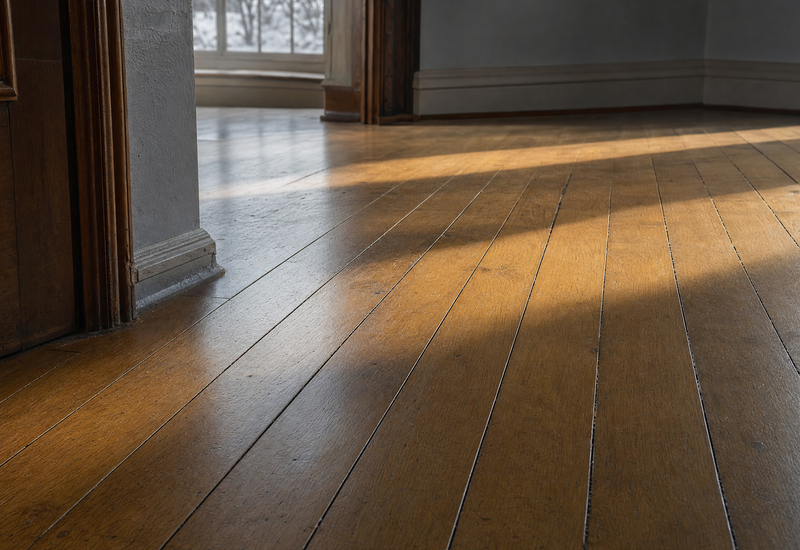
A hardwood floor should not look flat, cloudy, or lifeless after normal cleaning. If the surface still looks dull once dust and residue are removed, the protective finish may be worn down. This is especially common in high-traffic areas like hallways, kitchens, living rooms, and entryways.
Dullness does not always mean the wood itself is damaged. In many cases, the top finish layer has simply lost its clarity and protection. That is good news because refinishing may restore the surface, improve the color, and help protect the wood again.
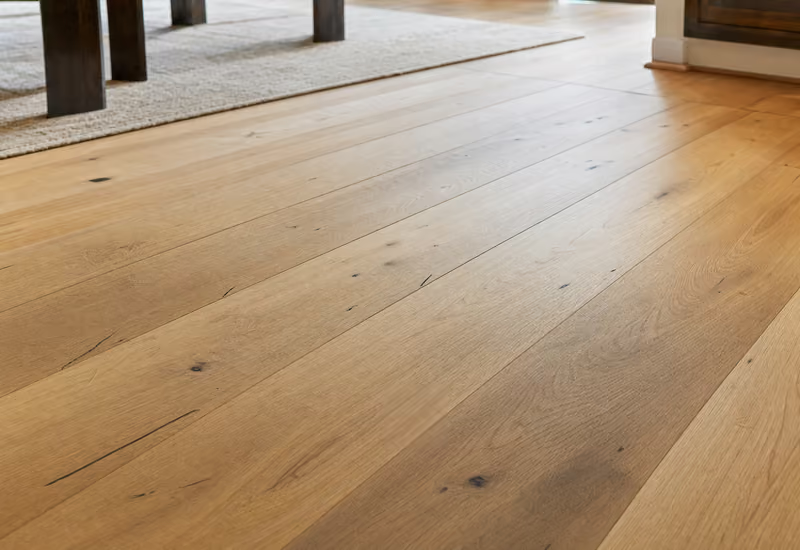
Every hardwood floor gets small scratches over time. Dogs, chairs, shoes, toys, furniture movement, and everyday life all leave marks. Light surface scratches are often part of normal wear, but when scratches become widespread, refinishing may be the right move.
Refinishing can remove many surface scratches because the floor is sanded before new stain and finish are applied. Deep gouges, cracked boards, dark pet stains, and water-damaged boards may need hardwood floor repair before the final finish is applied. That is why a professional inspection matters. The goal is not just to make the floor look better for a few months. The goal is to refinish it correctly so the new surface holds up.
One simple warning sign is how the floor reacts to moisture. If a small drop of water beads up on the surface, the finish is still offering some protection. If water quickly darkens the wood or soaks in, the finish may be worn through.
This does not mean you should test your entire floor with water. Hardwood and moisture are not friends. But if spills are leaving dark marks faster than they used to, it may be time to have the floor evaluated.
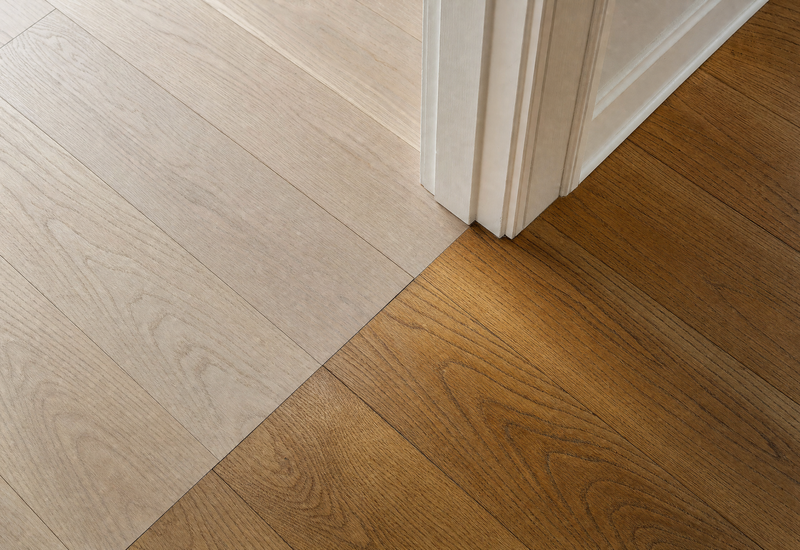
Sunlight, rugs, furniture placement, and old stain can cause hardwood floors to age unevenly. You may notice that the floor under a rug looks darker than the exposed floor, or that rooms with big windows have more fading. Refinishing gives homeowners a chance to even out the appearance and choose a new stain color if the floor is a good candidate.
A good refinishing process includes sanding, stain selection, and protective finish coats. This is where craftsmanship matters. The stain has to work with the wood species, not just with a picture from the internet.
Gray areas can be a sign that the protective finish is gone and the wood is being exposed to moisture, dirt, and everyday wear. Once the raw wood is exposed, the floor becomes more vulnerable. Waiting too long can turn a refinishable floor into a repair project.
If you see gray boards, rough spots, or areas that feel different underfoot, do not wait until the entire room looks damaged. A flooring professional can tell whether refinishing is enough or whether some boards need to be repaired first.
Refinishing is powerful, but it is not magic. Some floors need repair or replacement instead. If the boards are severely warped, heavily water-damaged, too thin to sand again, or loose across large areas, replacement may be the smarter long-term choice. In other cases, a few board repairs before refinishing can save the rest of the floor. If you are unsure whether your floors qualify for dustless floor refinishing, a professional inspection will give you a clear answer.
If your hardwood floors look dull, scratched, faded, gray, or worn, the best next step is a professional evaluation. Copeland Hardwood Floors can look at the condition of the wood, the current finish, the thickness of the floor, and any damaged areas before recommending refinishing, repair, restoration, or replacement.
Ready to find out what your floors need? Call Copeland Hardwood Floors or request a hardwood floor refinishing quote in Gallatin, TN.
Can old hardwood floors really look new again?
Many older hardwood floors can look dramatically better after sanding, staining, and finishing, as long as the wood is thick enough and structurally sound.
Can refinishing remove scratches?
Refinishing can remove many surface scratches. Deep gouges, pet stains, or damaged boards may need repair before refinishing.
Is refinishing cheaper than replacing hardwood floors?
In many cases, refinishing costs less than full replacement because the existing floor is restored instead of removed and replaced. A professional inspection is needed to compare the best options.