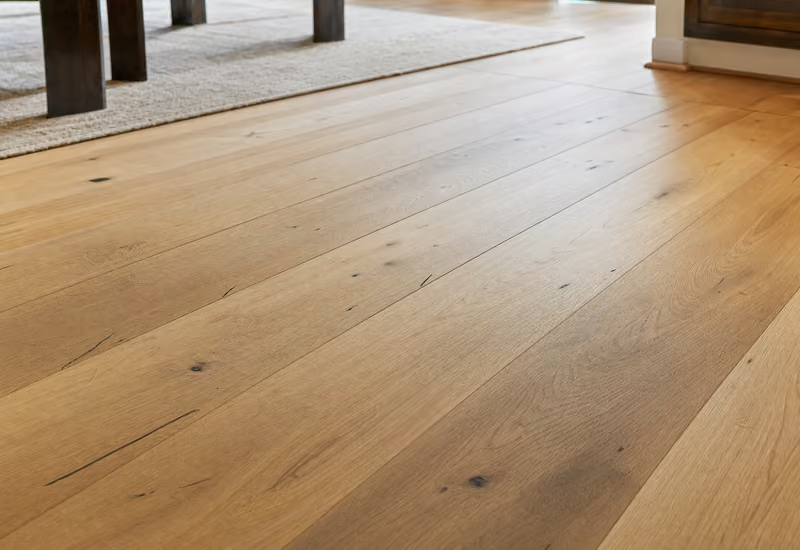
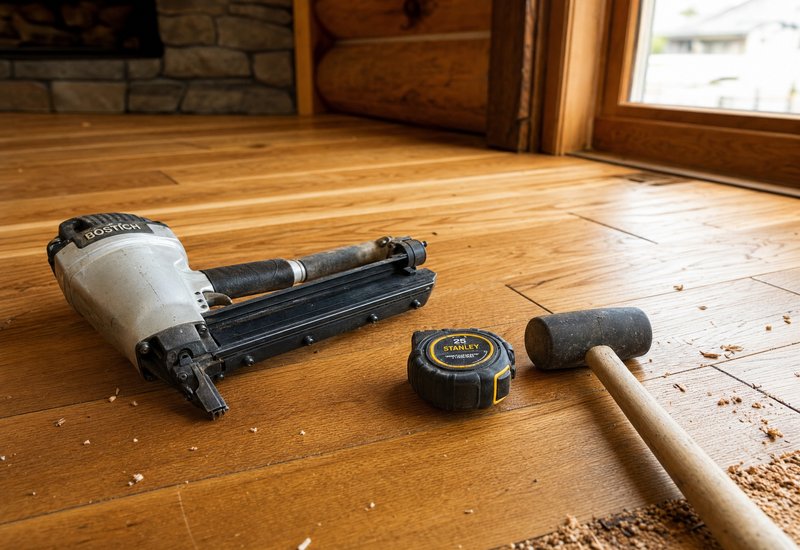
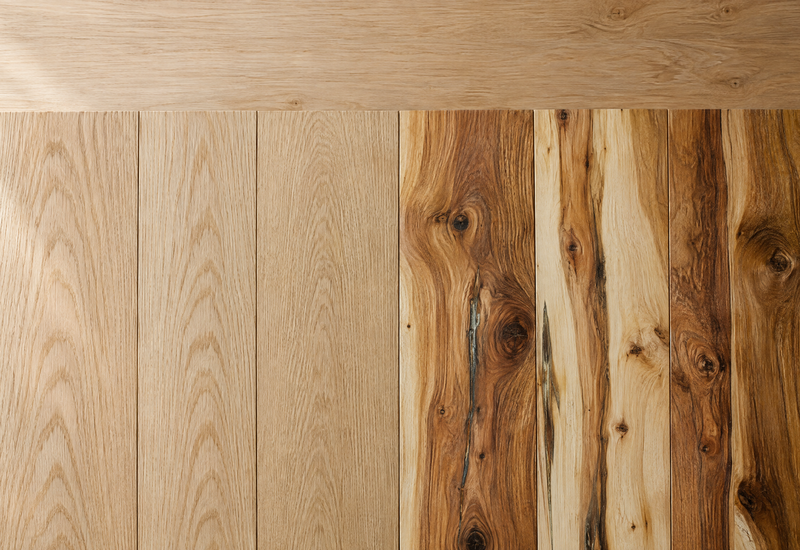
Solid or engineered hardwood? Learn the key differences in construction, durability, moisture resistance, and lifespan to choose the right hardwood floor for your home in Gallatin, TN.
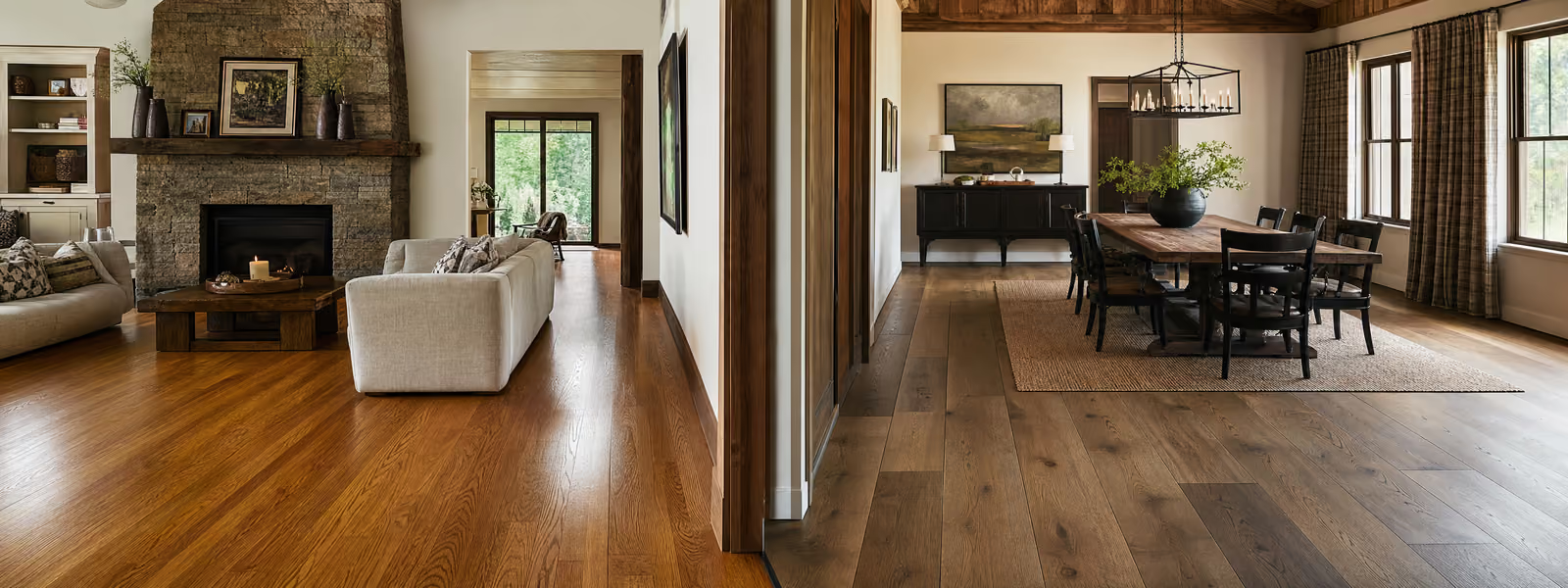
When homeowners decide to invest in new hardwood floor installation, they quickly encounter a major decision: should they choose solid hardwood or engineered hardwood? Both options provide the warmth, beauty, and value of real wood. However, they are constructed differently, perform differently in certain environments, and have different long-term maintenance needs. Understanding these differences is crucial for choosing the right flooring option for your home in Gallatin, TN.
Solid hardwood is milled from a single, solid piece of wood. The boards are typically ¾-inch thick and feature a tongue-and-groove design for installation. Solid hardwood is the traditional flooring material that has been used in homes for centuries.
Solid hardwood is incredibly durable. Because it is thick, it can be sanded and refinished multiple times over its lifespan. With proper care, a solid hardwood floor can easily last 75 to 100 years or more. It is highly sought after by homebuyers and often adds significant resale value to a property. It is often installed unfinished and then sanded and finished on-site, allowing for complete customization of stain color and finish sheen.
The primary limitation of solid hardwood is its moisture sensitivity. Solid wood expands and contracts significantly with changes in humidity and temperature. It is susceptible to warping or cupping if exposed to excess moisture. Because of this, solid hardwood should only be installed at or above ground level (on grade or above grade). It is generally not recommended for basements or directly over concrete slabs without a specialized subfloor.
Engineered hardwood is also real wood, but it is constructed in layers. The top layer (the wear layer) is a veneer of real hardwood — such as oak, hickory, or maple. Beneath this top layer is a core made of high-quality plywood or high-density fiberboard (HDF). These layers are stacked in a cross-grain configuration and bonded together under heat and pressure.
The cross-grain construction makes engineered hardwood much more dimensionally stable than solid wood. It expands and contracts less when humidity levels change, making it an excellent choice for basements (below grade) and for installation directly over concrete slabs or radiant heating systems. The added stability also allows engineered hardwood to be manufactured in much wider planks, often 5 to 8 inches or more, without the risk of severe cupping.
The lifespan of engineered hardwood depends entirely on the thickness of the top wear layer. A high-quality engineered floor with a thick wear layer can last 30 to 50 years and can be refinished once or twice. Cheaper options with a thin veneer cannot be sanded and may only last 15 to 20 years.
FeatureSolid HardwoodEngineered HardwoodConstructionSingle solid piece of woodReal wood veneer over plywood coreLifespan75–100+ years20–50 years (depends on wear layer)RefinishingMultiple times1–2 times (if wear layer is thick enough)Moisture ResistanceLow — expands and contractsHigh — dimensionally stableBest Installation LocationAbove grade (wood subfloor)Above, on, or below grade (concrete OK)Plank Width OptionsTypically up to 5 inchesAvailable in very wide planks (5–8"+)CustomizationFully customizable on-siteOften prefinished at factory
There is no single "better" option — only the best option for your specific situation.
Choose solid hardwood if you want a floor that can last for generations and be refinished many times, if you are installing on a wood subfloor at or above ground level, if you want the traditional, custom look of site-finished hardwood, or if maximum long-term resale value is your primary goal.
Choose engineered hardwood if you are installing flooring in a basement or directly over a concrete slab, if you prefer the look of very wide planks, if you want a highly stable floor in an environment with fluctuating humidity, or if you prefer the speed and convenience of prefinished hardwood installation.
Both solid and engineered hardwood are excellent investments that will elevate the look of your home. The decision ultimately comes down to where the floor is being installed, your subfloor type, and your long-term goals for the space. Copeland Hardwood Floors offers expert installation for both solid hardwood and engineered hardwood, and we can help you evaluate your home to make the best choice. Browse all of our flooring options to compare products.
Ready to explore your hardwood options? Contact Copeland Hardwood Floors to discuss solid and engineered hardwood installation in Gallatin, TN.
Is engineered hardwood fake wood?
No. Engineered hardwood has a top layer of 100% real wood. It looks and feels exactly like solid hardwood because the surface you walk on is genuine wood. It is not the same as laminate or vinyl, which use printed images to mimic wood.
Can engineered hardwood be refinished?
It depends on the thickness of the top wear layer. High-quality engineered hardwood with a thick wear layer (3mm or more) can usually be sanded and refinished 1 to 2 times. Products with a very thin veneer cannot be sanded.
Which is more expensive, solid or engineered hardwood?
The cost varies widely based on the wood species, plank width, and quality. High-end engineered hardwood can cost as much as, or more than, solid hardwood. Generally, installation costs may be slightly lower for engineered floors if they are prefinished and floated or glued, compared to the nail-down, sand, and finish process of solid wood.