Considering DIY hardwood floor refinishing? Compare the risks, cost factors, timeline, and results of DIY versus professional refinishing for your Middle Tennessee home.
The quick answer: DIY hardwood floor refinishing can work for a small, straightforward room with solid hardwood and light wear. For most full refinishing projects—especially engineered flooring, large connected spaces, staining, repairs, or deep damage—hiring a professional is the safer way to protect the floor and achieve an even, durable result.
When hardwood floors begin to look scratched, dull, faded, or worn, many homeowners in Gallatin, Nashville, Hendersonville, and surrounding Middle Tennessee communities ask the same question: should I refinish the floors myself or call a professional?
It is a fair question. Hardwood flooring is a significant feature of a home, and restoring it can change the look of an entire room. The right choice depends on the condition and construction of your floor, the scope of the project, your experience with sanding equipment, and how much risk you are willing to accept.
Before deciding between DIY and professional work, it helps to understand the difference between a recoat and a full refinish.
A recoat, also called a buff-and-coat or screen-and-recoat, lightly abrades the existing finish and applies a new protective topcoat. It can be a good option when the floor is structurally sound and the finish has only light scratching or dullness. Because it does not remove the floor down to bare wood, it is less invasive than full refinishing.
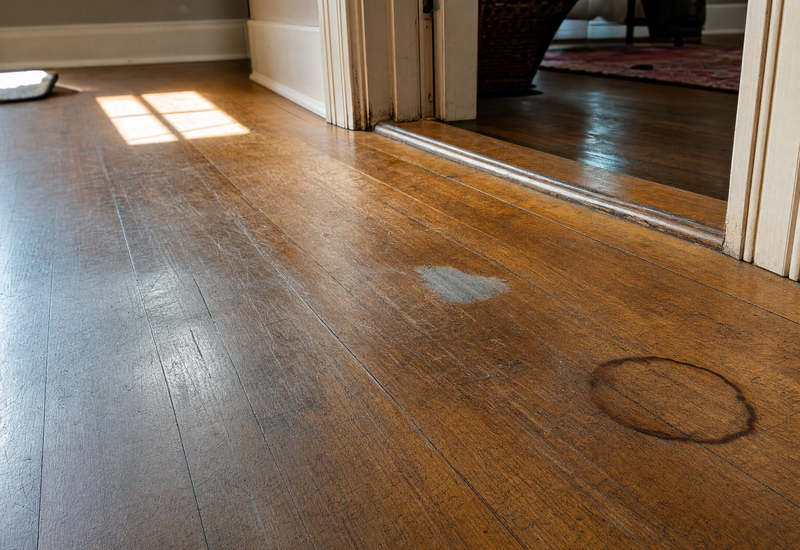
Full hardwood floor refinishing is a more demanding process. It sands away the old finish, exposes bare wood, addresses surface imperfections, and then applies new stain and/or finish coats. This is typically the right approach when a floor has deep scratches, worn-through areas, heavy discoloration, visible stains, or significant surface wear. Full refinishing carries a greater risk of damaging the floor than recoating, which is why it is generally less DIY-friendly.
One simple preliminary check is the water-drop test. Place a few drops of water on an inconspicuous part of the floor. If the water beads or absorbs slowly, the finish may still be offering protection. If it soaks in right away, the finish may be worn and the floor may need professional evaluation.
DIY refinishing is not automatically the wrong choice. It can be reasonable for a homeowner who is comfortable with detailed preparation, tool safety, sanding technique, finish application, and cleanup. A small spare bedroom with flat, solid hardwood is much more forgiving than a high-traffic living room that connects to a hallway and kitchen.
A DIY project may be worth considering when the floor is solid hardwood, the room is small and easy to clear, and the wear is limited. You should also be willing to accept a learning curve. Refinishing requires more than renting a machine for an afternoon. It involves clearing the room, preparing edges and baseboards, selecting the correct abrasives, moving continuously with the sander, cleaning between sanding stages, addressing filler or minor repairs, and applying finish carefully in a dust-controlled space.
Floor sanders are powerful. In experienced hands, they can remove old finish efficiently and prepare the wood for a beautiful new coating. In inexperienced hands, they can create low spots, gouges, chatter marks, uneven edges, and visible sanding patterns.
A common mistake is allowing a machine to remain still for even a moment. That can cut a noticeable mark into the floor. Skipping sanding grits or using mismatched grits between the main floor and edge work can also leave uneven texture or scratches that become more visible after stain or finish is applied.
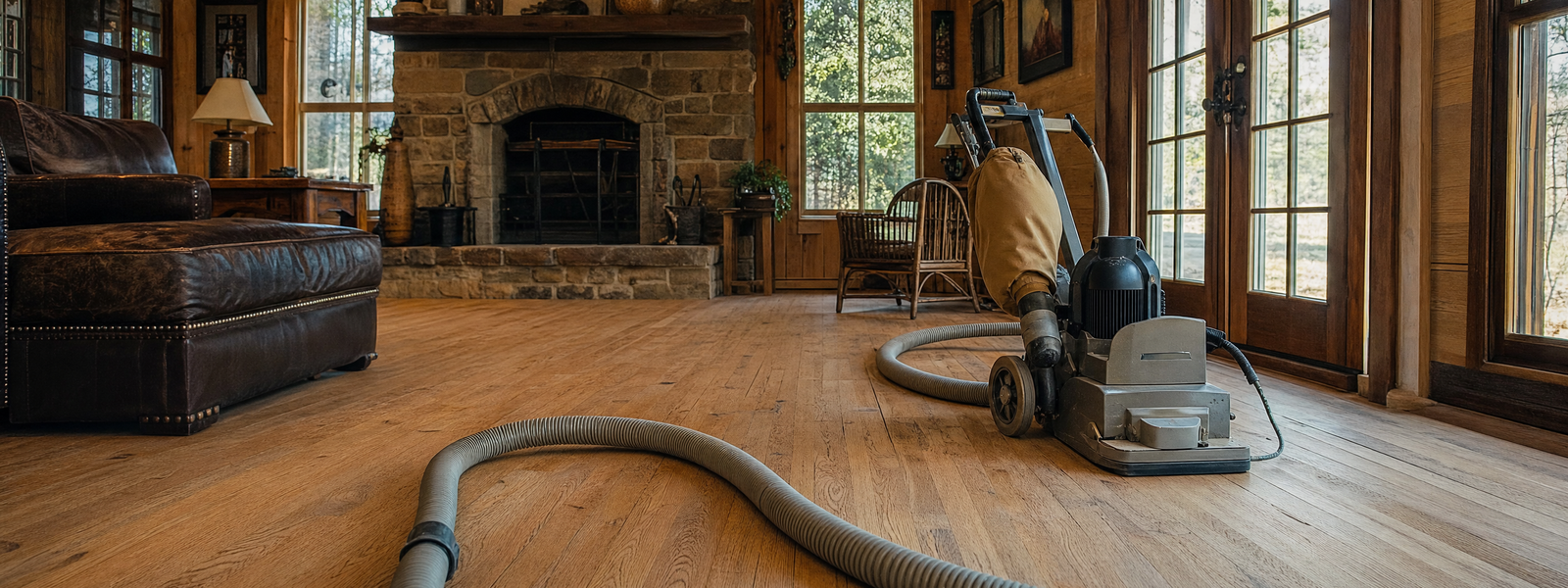
Dust control is another major factor. Refinishing creates fine dust that can travel beyond the work area. Thorough cleanup is essential before finish is applied because dust and debris can affect the final appearance. Dustless floor refinishing uses equipment designed to capture dust at the source, helping keep the work area cleaner while the floor is prepared.
The biggest risk is not simply an imperfect result. It is removing too much usable material from the floor. Hardwood has a limited amount of wood available for sanding. A mistake may require a repair, a more aggressive restoration, or, in severe cases, replacement of part of the floor.
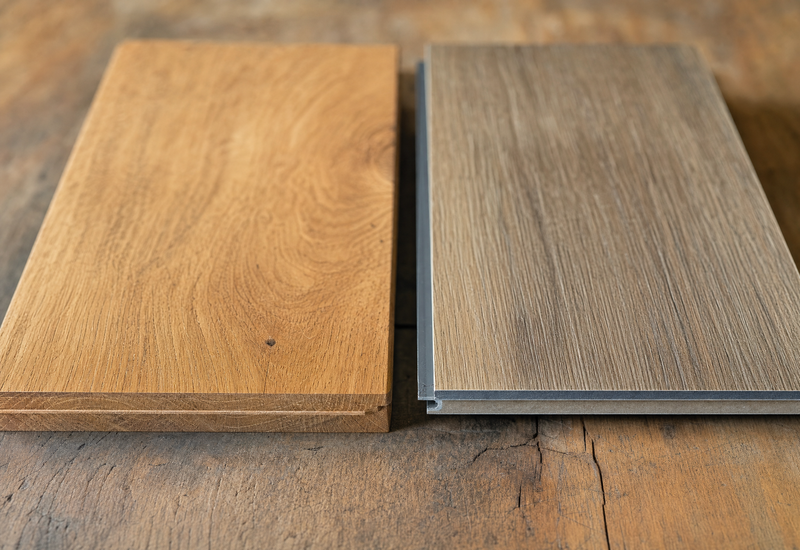
Engineered hardwood is real wood flooring, but it has a hardwood veneer over layered construction. The thickness of that veneer determines whether the product can be refinished at all and how much sanding it can safely tolerate.
Some engineered floors can be carefully refinished, while others should not be sanded. The answer depends on the product and its condition. If you are not certain whether your flooring is solid or engineered, do not guess. A flooring professional can inspect an exposed edge, vent opening, or transition area to help identify the product before any sanding begins.
Hiring a professional is not just about delegating the physical work. It gives you an assessment of the floor before restoration begins, a process suited to the condition of the wood, and a better chance of achieving a consistent finish from room to room.
A skilled refinisher can determine whether your floor needs a simple recoat, a full sand-and-refinish, targeted repairs, or a different solution altogether. That assessment is valuable when a floor has pet stains, dark water marks, loose boards, gaps, old finish buildup, or uncertainty about prior refinishing.
Professionals also bring appropriate sanding equipment and know how to work across open spaces, tight edges, corners, transitions, stairs, and thresholds. They can address board repairs and discuss whether a stain choice is likely to work with your wood species and existing floor character.
DIY refinishing can take longer than expected, especially for homeowners learning the process as they go. The floor must be cleared, the work area protected, the project completed in stages, and the finish allowed to dry and cure before normal use resumes.
Full refinishing commonly takes several days once sanding, stain, finish coats, drying, and cure time are considered. Water-based systems often dry faster than oil-based systems, but the actual schedule depends on the size of the project, humidity, stain choice, product instructions, and site conditions. When planning the work, think beyond the time spent sanding. Consider where furniture will go, whether family members and pets need to avoid the work area, and how long rugs and furniture should remain off the floor after the final coat.
DIY may be a reasonable fit when you are refreshing a small, uncomplicated room with solid hardwood, the damage is light, and you have the skills and patience to follow every step carefully.
Hiring a professional is usually the better choice when the floor is engineered, the project includes several rooms, the boards need repair, the floor is wavy or cupped, the damage is deep, or you want a stain change or a highly consistent finished appearance. It is also the prudent choice when the floor is a major architectural feature of the home and a mistake would be difficult to correct.
The best refinishing decision is the one that protects the floor’s remaining life—not merely the one that gets the old finish off the fastest.
A clear conversation before the work begins helps everyone understand the scope. Ask whether your floor is a candidate for recoating or full refinishing, whether repairs are needed, what finish system is proposed, how dust is managed, what you need to remove from the room, and when you can safely walk on the floor and return furniture.
You should also ask about any areas that require special attention, such as stairs, thresholds, closets, pet-damaged boards, or transitions to other flooring. These details help ensure the recommendation fits the condition of the floor rather than applying a one-size-fits-all process.
Is it hard to refinish hardwood floors yourself?
Yes. Full hardwood floor refinishing is generally an advanced DIY project because it requires controlled sanding, edge work, thorough cleanup, safety measures, and careful finish application. A simple recoat can be more approachable when the existing finish is intact.
Can I refinish engineered hardwood myself?
It is generally not recommended. Engineered hardwood has a limited real-wood veneer, and some products cannot be refinished. A professional should identify the flooring and assess the wear layer before sanding.
Can I put a new finish over an old hardwood floor?
Sometimes, but not always. A recoat must properly adhere to the existing finish, and floors with wax, deep damage, incompatible products, or worn-through areas may need a different approach. A professional assessment can help determine the right treatment.
How long will I need to stay off refinished hardwood floors?
Timing depends on the finish system, number of coats, humidity, and the manufacturer’s cure guidance. Your refinishing professional should give you project-specific instructions for walking on the floor, placing rugs, and returning furniture.
If your hardwood floors are scratched, dull, discolored, or worn in high-traffic areas, Copeland Hardwood Floors can help you understand the most practical next step. Contact our team for an assessment tailored to the condition of your floor—not a one-size-fits-all solution.